Panel overview
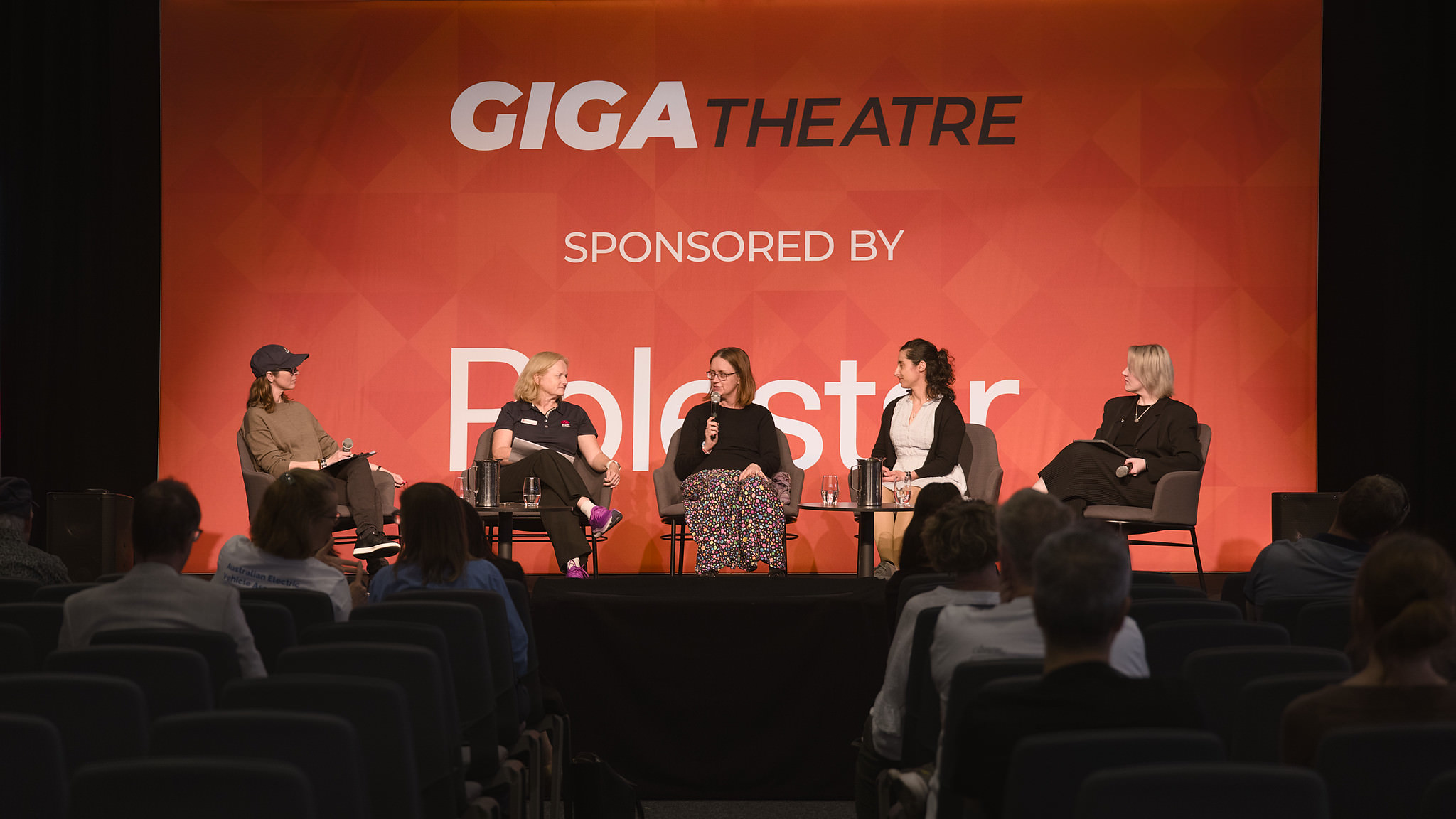
The discussion features Sarah Aubrey as moderator and several panelists (Chris Wenban, Dr Eleanor Short, Rhiannon Evans), one of whom has worked professionally in electrification advocacy for five years, another who oversees or advises on EV charger grant conditions, and others sharing personal experience as EV owners and family decision-makers, on the topic of women and adoption barriers in the EV transition.
Who initiates the switch to electric
Asked who instigated the EV purchase in their own household, one panelist described buying an EV after a car accident prompted the decision, framing the timing as fortunate rather than planned. Another said electrification has been her actual job for five years and that she’s since moved her whole family onto solar and battery storage, with relatives now wanting rides in her EV at gatherings. A third said she’s the sole car-purchasing decision-maker in her household and now defaults to hiring an EV whenever she rents a car, including hiring two EVs with her sister during a recent UK trip. She said in her experience people who switch to EVs essentially never go back to petrol, and that in years of speaking at these kinds of events, she’s met exactly one person who did.
First impressions shape lasting opinions
One panelist argued that a bad first experience with a poorly located or poorly lit charger can convince someone the whole charging network is unreliable. She said grant funding for new chargers she’s involved with carries conditions around lighting and site safety, and described a specific fast charger she now avoids: it sits next to a poorly lit pub, near portable toilets, roughly 800 metres from the nearest service station.
The learning curve on a first EV
Another panelist recalled the adjustment period after her first EV, a Tesla, and said the same learning curve resurfaced when she helped her parents get their first EV, downloading apps and relearning how to charge from scratch. She said confidence builds fastest when there’s a visible, planned public charging network people can point to.
Trip anxiety and infrastructure strain
Panelists agreed that home charging is straightforward, but confidence for longer trips (finding a charger, paying easily) remains a bigger barrier than vehicle cost or range at this point. One noted that charging demand spikes during peak travel periods like Easter and Christmas, leading to queues that public messaging hasn’t fully addressed.
A past political claim, and safety considerations
One panelist referenced a former prime minister’s claim that EVs would “end the weekend,” calling it inaccurate in her own experience. She described having access to an EV on and off since 2018 through her in-laws’ second-generation Nissan Leaf (originally released around 2014, with roughly 200 km of range), including taking her driving test in that car around 2019, and noted how far battery capacity has improved since. She said charger placement in well-lit, populated areas is a safety consideration, particularly for women driving and charging alone, that most men don’t have to weigh the same way.
Reframing the charging mindset
One panelist argued that people bring petrol-station habits to EV charging and miss the parts that work differently, describing plugging in without a second thought at a cottage in the UK’s Lake District once a home charger was installed. She said the anxiety that comes with a first-time charging experience is close to universal early on, and fades with visibility, education sessions, and word of mouth among friends and family.
Charging stops as a social experience
Several panelists described charging stops becoming genuinely social: strangers offering unsolicited advice and encouragement at chargers, and a road trip involving camping and multiple charging stops that turned into breaks at local cafes, though one panelist noted a park mix-up where people sitting near a charger weren’t actually waiting to use it, prompting an awkward “you’re next” conversation. Another panelist, travelling with two children, described stopping at a supercharging station in Goulburn near a well-known local landmark, needing charging stops to double as entertainment breaks (playgrounds, shops) rather than just service-station downtime.
EV friendly towns
One panelist highlighted a program run by the Electric Vehicle Council with New South Wales government support that rates towns as “EV friendly,” similar to older “RV friendly town” branding, based on charger availability, facilities, and local hospitality, aimed at directing road-trippers off the highway and into small-town cafes and shops rather than straight to service stations.
Apartment charging solutions
An audience question raised the disadvantage faced by residents of high-rise apartments without dedicated charging. One panelist described going three years without home charging, relying instead on shopping-centre charging timed to errands (she cited roughly 53 minutes as her typical shopping stop, tracked via her charging app), before eventually moving somewhere with home charging. She recommended fitting charging into an existing routine, such as parking to charge and walking the rest of the way to a shop, rather than treating it as a separate task.
The moderator described low-cost smart-plug alternatives now appearing in apartment buildings: simple 10 or 15 amp powerpoints with QR-code booking that don’t require a dedicated car space, at a fraction of the cost of installing a full charger. She cited one Melbourne apartment building that installed around 200 of these plugs for at least 17 residents’ EVs. Three named smart-charging products are currently running funded trials under ARENA, testing subsidised level-one charger installs in apartment buildings and comparing costs against overnight charging rates. One panelist noted apartment dwellers don’t currently have a petrol station in the building either, so the inconvenience isn’t as new as it might appear next to a driveway charger.
Policy movement on shared buildings
One panelist mentioned that the Energy and Climate Change Ministerial Council discussed plug-in solar and battery options for apartments the week before this panel, and referenced Smart Energy Council members developing modular, stackable plug-in batteries designed to offset EV charging load on a building’s existing circuit without major electrical upgrades. Panelists also referenced New South Wales legislation preventing strata committees from issuing blanket bans on EV charging requests.
Home charger sizing
In response to an audience question about needing three-phase power at home, a panelist said most households don’t need it: a properly installed single-phase charger delivers around 40 km of range per hour, which is generally enough, particularly for overnight charging.