# Green Living Energy Info Day, Kariong
**Date**: November 7, 2026
**Location**: Kariong Community Hall, Australia
The Green Living Energy Info Day in Kariong packed about 3-4 hours of talks and discussions into one Saturday. Topics ran from one household's 12-year electrification journey to a proposed 10 MWh community battery for postcode 2251. The focus was practical: what Central Coast households can do now, what it costs, and what communities can do together.
Lisa Wriley from the Kariong Eco Garden organised the day in the solar powered Kariong Community Hall (Kariong Progress Association). Lisa and the Association hope the hall will one day have its own battery and EV charger!
## Rewiring Australia and the electrify everything movement
Tim Baxter, who coordinates Rewiring Australia's network of about 110 community groups, joined by video. Rewiring Australia lobbies governments, regulators and retailers for better policy, incentives and finance. It also gives households practical planning tools and supports local groups running info sessions, community batteries and local advocacy. Tim stressed that the movement is bottom-up and mostly run by volunteers.
His main pitch was [Electric Saul](https://electricsaul.com), a free AI advisor [launched with Google in August 2026](https://tlnews.com.au/electric-saul-new-ai-tool-helps-australians-work-out-how-to-cut-bills-and-go-electric/). It draws on Saul Griffith's research and official rebate information. You can upload a bill or an installer's quote, compare options, and leave with a plan to take to installers. Several later speakers recommended it.
The local state MP for Gosford Liesl Tesch also dropped in to congratulate the local Electrify group on a grant to expand across the Central Coast.
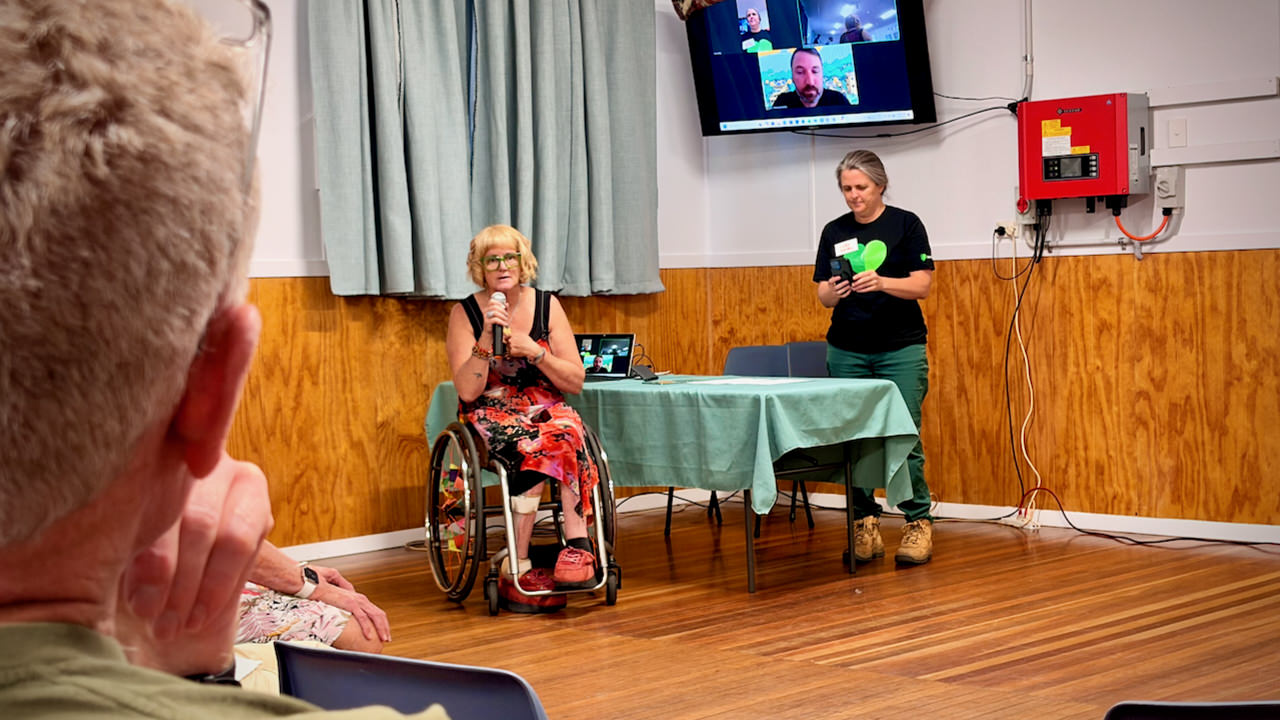
## Ian Garradd: electrifying one house, step by step
Ian Garradd, an energy and electrification specialist who spent 10+ years electrifying North Sydney Council's assets, walked through his own multi-generational house. It has two flats and an Airbnb, all on one meter.
1. **Heat pump hot water** replaced gas in 2014 for $4,600 and lasted 12 years. It had the biggest single effect.
2. **Heating** is mostly sun through the windows, plus a reverse-cycle air conditioner.
3. **Double glazing, pelmets and insulation** went in during a renovation, including $10,000 to $20,000 to remove asbestos cladding so the walls could be insulated.
4. **Induction cooking** needed only a $700 cable run to the subboard.
5. **Solar and batteries** were added in stages. The house now has 27 kWh of batteries, which cost $20,000. He estimates about $15,000 today with the subsidy.
6. **An electric car** covers about 15,000 km a year and runs about 90% on solar.
| Measure | Before | Now |
| --- | --- | --- |
| Annual energy use (electricity, gas, petrol) | about 22 to 23 kWh | about 15 to 15.8 kWh |
| Annual energy cost, inflation-adjusted | $7500 ($5000 at the time) | $1200 |
Accumulated savings of about $55,000 now roughly match what the upgrades cost. The drop in consumption comes from efficiency. A gas cooktop is about 40% efficient. A heat pump delivers about four units of heat per unit of electricity. An EV is 70 to 80% efficient against about 25% for a petrol car.
Ian's battery is in a virtual power plant (VPP) through Amber Electric. That lets the retailer export at evening peaks. Over the previous 30 days his bill was minus $77, at an average export price of 46 cents per kWh. His advice: add a battery when you add solar, choose components from a single brand to monitor everything from a single app, and choose a retailer that pays fairly for exports.
## From the Q&A
- **Prices:** Daytime wholesale prices have roughly tripled in two years, from 2 to 4 cents to about 15 cents per kWh, as batteries soak up midday solar. Evening prices are falling. Ian expects daytime feed-in tariffs to rise.
- **Feed-in tariffs:** Attendees on flat plans got 4 to 5 cents, against Ian's 46-cent VPP average.
- **Vehicle-to-home:** It's early days. A national trial of about 2000 EVs, mostly BYDs, is under way. Ian expects it to be common within five years.
- **Balcony solar:** Plug-in panels and a battery suit renters. This is widespread in Germany and the UK and starting in Western Australia. More to come Australia-wide next year.
- **Solar hot water versus heat pump:** Both work, but a heat pump keeps heating at night and on cloudy days.
## John Shiel: saving money with home batteries
John Shiel's first talk was a buyer's guide based on his own battery purchase. He is a retired civil engineer, runs the energy auditing business EnviroSustain, and lives at Narara Ecovillage.
**Why buy one.** A battery cuts expensive overnight power and lowers emissions. It lets you charge an EV at night affordably and keeps the house running in a grid outage. It also means you can run an air conditioner on hot nights when the power is off. With the new size caps on rebates, he says a battery can still pay for itself within 5 to 6 years, and VPPs can earn extra income. Subscription offers such as [Zelora](https://www.bunnings.com.au/services/in-home/zelora-battery-solar) (Bunnings and Intellihub) and [SunPlus](https://sunenergy.com.au/sunplus/) (SunEnergy) avoid the upfront cost but can cost more overall. His other headline tip was to get off gas.
**Rebates.** The federal Cheaper Home Batteries Program gives up to 30% off the upfront cost. The NSW VPP incentive needs a VPP-compatible battery and now applies only to the first 28 kWh, though you can install more. The amount depends on how much capacity you make available to the grid, the VPP provider and the contract.
**Finding and vetting suppliers.**
- Find local suppliers through [SolarQuotes](https://www.solarquotes.com.au/), Google reviews, ProductReview and local Facebook groups.
- Check for an electrical licence, battery installation experience, and accredited installers where rebates require them. They should also carry public liability and professional indemnity insurance.
- Get at least three detailed quotes. Each should cover brand and model, usable capacity, warranty period and throughput warranty, and backup capability (whole house or selected circuits). It should also split equipment from labour and give monitoring app details.
**What a good supplier does.** A good supplier reviews your bills, assesses your existing solar and asks about your evening and overnight use. Then they explain why a particular size suits you. An average home uses about 20 kWh a day and often less than 10 kWh overnight, which sets the minimum size. If you have solar, ask whether they know your inverter and whether the battery will be DC- or AC-coupled. For backup, ask how much load it can run, whether blackout protection is in the quoted price, and how long switchover takes. Ask for the assumptions behind any payback figure: your tariff, feed-in rate, cycles per year and future prices. A supplier who recommends the same size to everyone is a red flag.
**John's result.** He compared seven suppliers.
| Option | Capacity | Price | Per kWh |
| --- | --- | --- | --- |
| Voltx (chosen) | 50 kWh | $6,000 | $150 |
| SigenStor, including EV charger | 16 kWh | $16,700 | about $1,000 |
Voltx was an unfamiliar brand. He went ahead because the supplier had mostly good reviews, a relative had one installed, and friends were ordering. He also upgraded the inverter from 5 kW to 10 kW. The battery saved $1,300 in its first eight months, about $160 a month, for a payback of about three years.
In hindsight, his ranking of what matters most starts with **after-sales support**. Next come who handles warranty claims (installer, wholesaler or manufacturer, and whether there is a local service team), communication, response to faults, and an established business. A battery warranty can run 10 to 15 years, so the company needs to last.
**Other answers:** Tell your insurer about a battery, or a fire claim could be refused. The cheapest new car in Australia is now an EV, the BYD Atto 1 at $19,990. A battery without solar can work on plans with three free midday hours. Cleaning solar panels after about five years can add 5 to 10% output.
## Community PowerShare: a big battery for people without one
Scott and Robyn McClung presented [Community PowerShare](https://www.communitypowershare.org), a registered not-for-profit, and its plans for a 10 MWh battery at the old Kincumber landfill to serve about 1,600 households. That is about 741 Tesla Powerwalls, and possibly the largest community battery in Australia. It is aimed at the roughly 60% of homes without solar and 90% without a battery, especially renters.
The model is simple. The battery charges at midday, when wholesale energy is often free or negative-priced, and discharges to subscribers in the evening peak. Subscribers pay that energy cost plus a few cents per kWh for operations, with no profit added. Sitting below the Avoca substation also qualifies for Ausgrid's 15 cent per kWh local-use discount, which could cut a 35 cent night rate to 20 cents. Rooftop solar in 2251 grew 50% in three years, from 25000 kW to 37000 kW, so there is plenty of midday energy to capture.
Funding has been slow. Federal community battery grants mostly went to network-owned batteries. The group now looks to the NSW Peak Demand Reduction Scheme, which pays accredited projects automatically, like solar rebates. The remaining gap would come from an Ausgrid partnership, a wholesale pass-through retailer such as Amber or Localvolts, and a loan of about half a million dollars from an ethical lender.
The group also suggested a smaller 300 to 500 kWh battery for the Kariong hall as an outage and heat refuge. Narara's community battery is 430 kWh. Councils are eligible for PDRS funding, so partnering with Central Coast Council could open that door.
## Narara Ecovillage: a working community battery
John Shiel closed with the story of Narara Ecovillage's community battery. He is also an affiliate researcher at the University of Newcastle.
Narara has about 80 high-performance, energy-positive homes. Residents can build what they like as long as it meets the village's building standards. Each home must have enough rooftop solar to cover its annual use, at least 5 kW. The village uses about half the electricity of comparable homes nearby, and a [2022 book on net zero buildings](https://doi.org/10.1007/978-981-19-6371-1) cites it as an exemplar net energy positive precinct.
**Funding.**
1. A $70,000 NSW community energy grant paid for a microgrid feasibility study. It covered options from partly to fully off-grid, using solar, wind, batteries and diesel backup. References from universities and CSIRO helped win it.
2. The consultant who did the study offered to write an ARENA application pro bono, with fees in arrears. It won $1.3 million. Narara says it was the first community to put solar on every home and to want a community battery.
**How it works.**
The village is a microgrid behind a 1,000 kVA transformer that can disconnect from the grid and run on its own. At its centre is a 430 kWh community battery, enough for about 45 homes, plus a backup generator. The battery stores daytime solar for use overnight and keeps the village running during outages. It also earns income from energy arbitrage and frequency control services. The village still exports about 374 MWh of net solar a year. Its own retailer, NEV Power, bills residents.
**What has been hard.**
- Connecting to Ausgrid required hiring a consultant.
- Off-the-shelf meter monitoring didn't work, and residents wanted a low-EMF system. The village built its own LoRaWAN system, which took two to three years to debug.
- Billing is manual, and rates must stay competitive with mainstream retailers.
- Homes range from 2 kW to 11 kW of solar, and only 20 have batteries, from 8 to 50 kWh. In an outage, home batteries can drain if the community battery is low and the generator hasn't started. Automatic generator start is in progress.
- It all runs on many volunteer hours.
**Next.** Stage 2 adds more home batteries. In about two years, once car warranties and plug standards allow, it will add vehicle-to-grid EVs to power homes at night. One 8 kWh V2G SigenStore battery is already in place.
For the technical detail, see Brown's [case study on protecting an LV microgrid](https://cse.cigre.org/cse-n039/a-case-study-of-protection-of-an-lv-microgrid.html) (CIGRE, 2025).
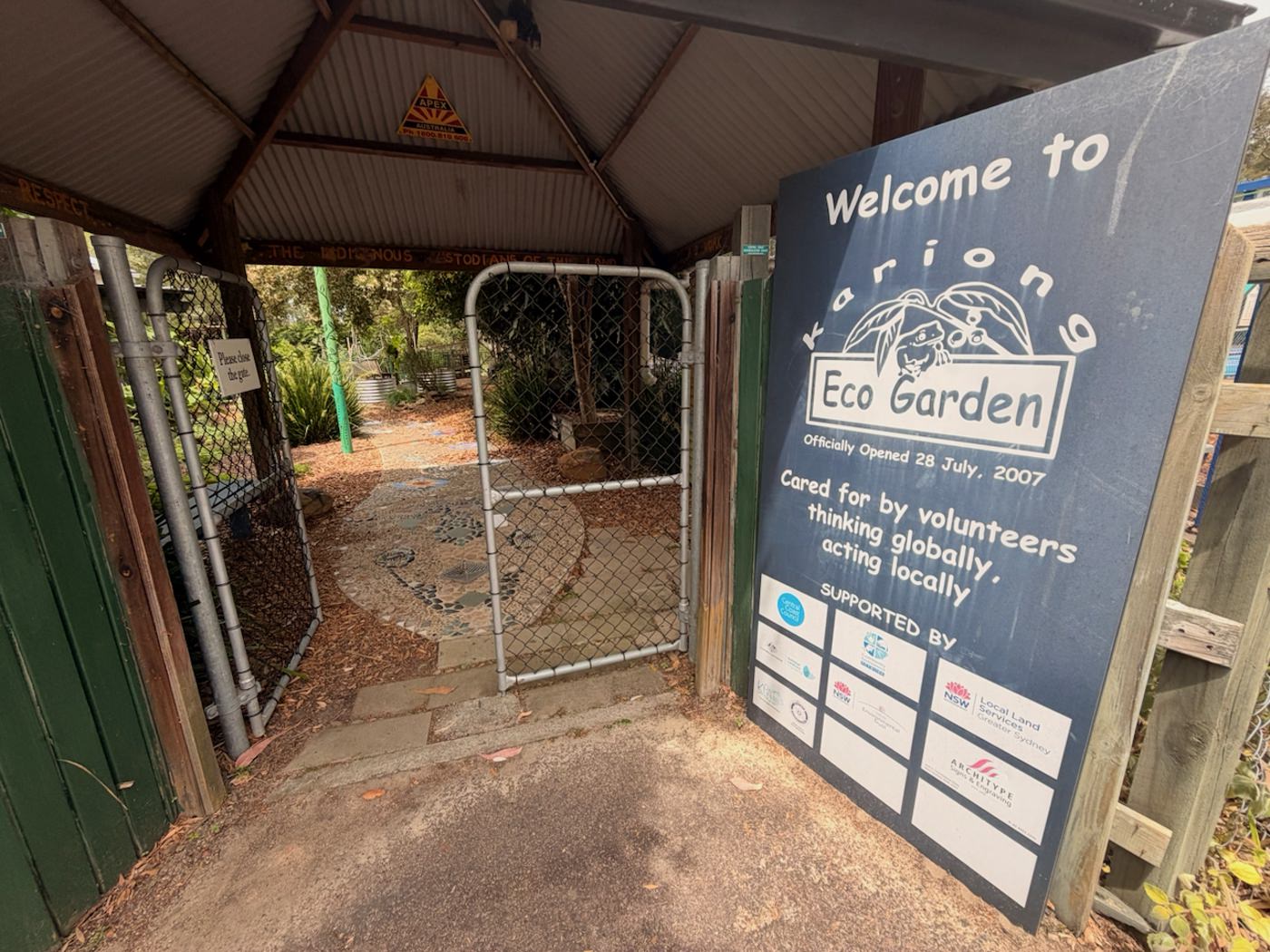
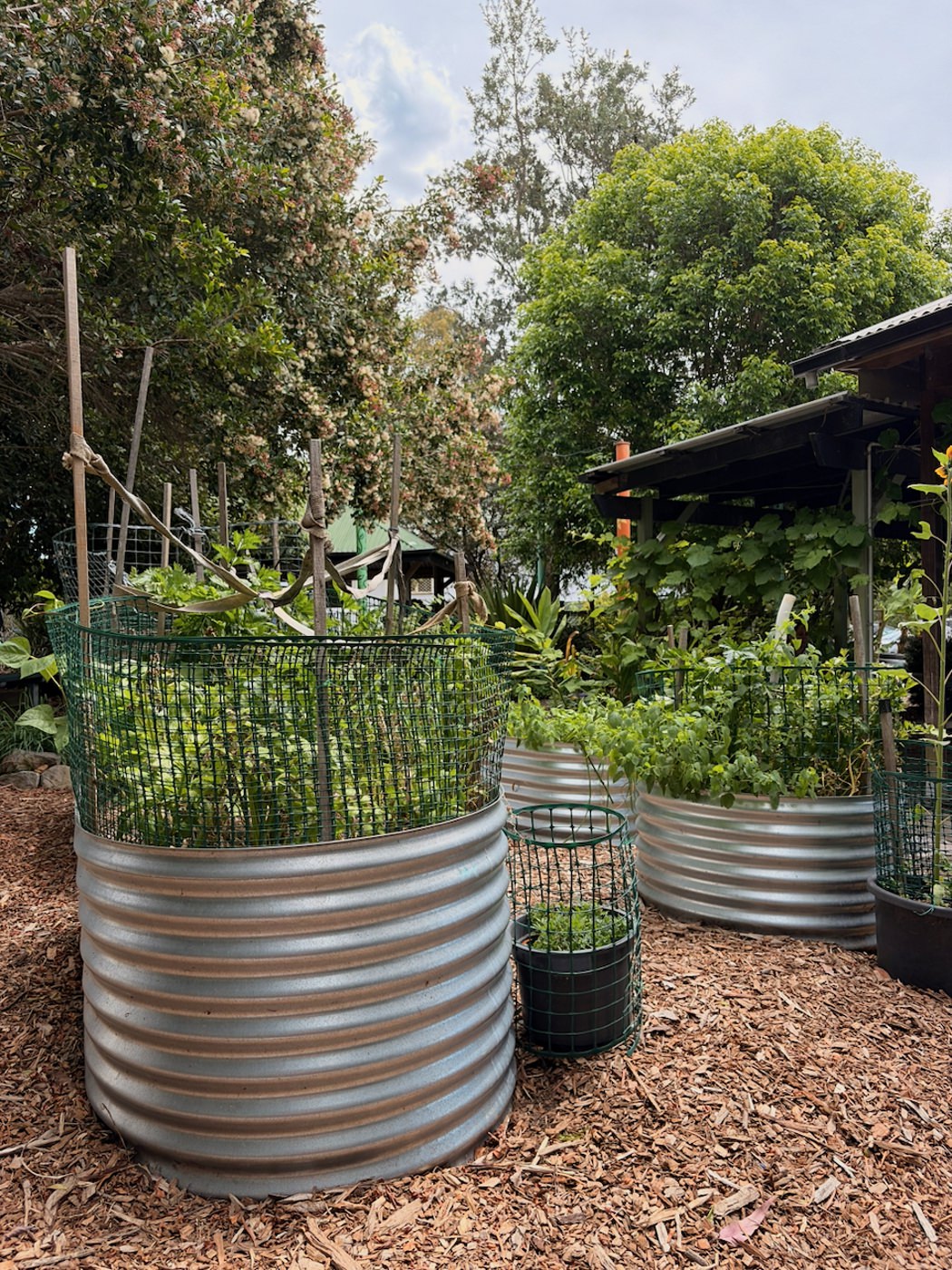
Lunch was had in the [Kariong Eco Garden](https://kariongecogarden.org.au) at the back.

## Resilience starts with neighbours
A short film featured SES volunteers and community action teams, groups of neighbours who share local knowledge about how their streets behave in floods and fires. Its message: preparation is everyone's job, a plan prevents panic, and connected communities recover faster. The simplest first step is to get to know your neighbours.
Thanks to everyone who made the day possible: Lisa and the Kariong Eco Garden, the Kariong Progress Association, the speakers, and the volunteers.
## What to take away
- Replace gas hot water with a heat pump when the old system fails.
- Cut demand first with sun, curtains, insulation and glazing.
- Get several battery quotes. Prices for similar capacity vary several-fold.
- Pick a retailer that pays fairly for exports.
- If you can't afford your own system, look at community batteries.
- Know your neighbours.
Start with [Electric Saul](https://electricsaul.com) or find a local group through [Rewiring Australia](https://www.rewiringaustralia.org). Figures are as the speakers gave them on the day.